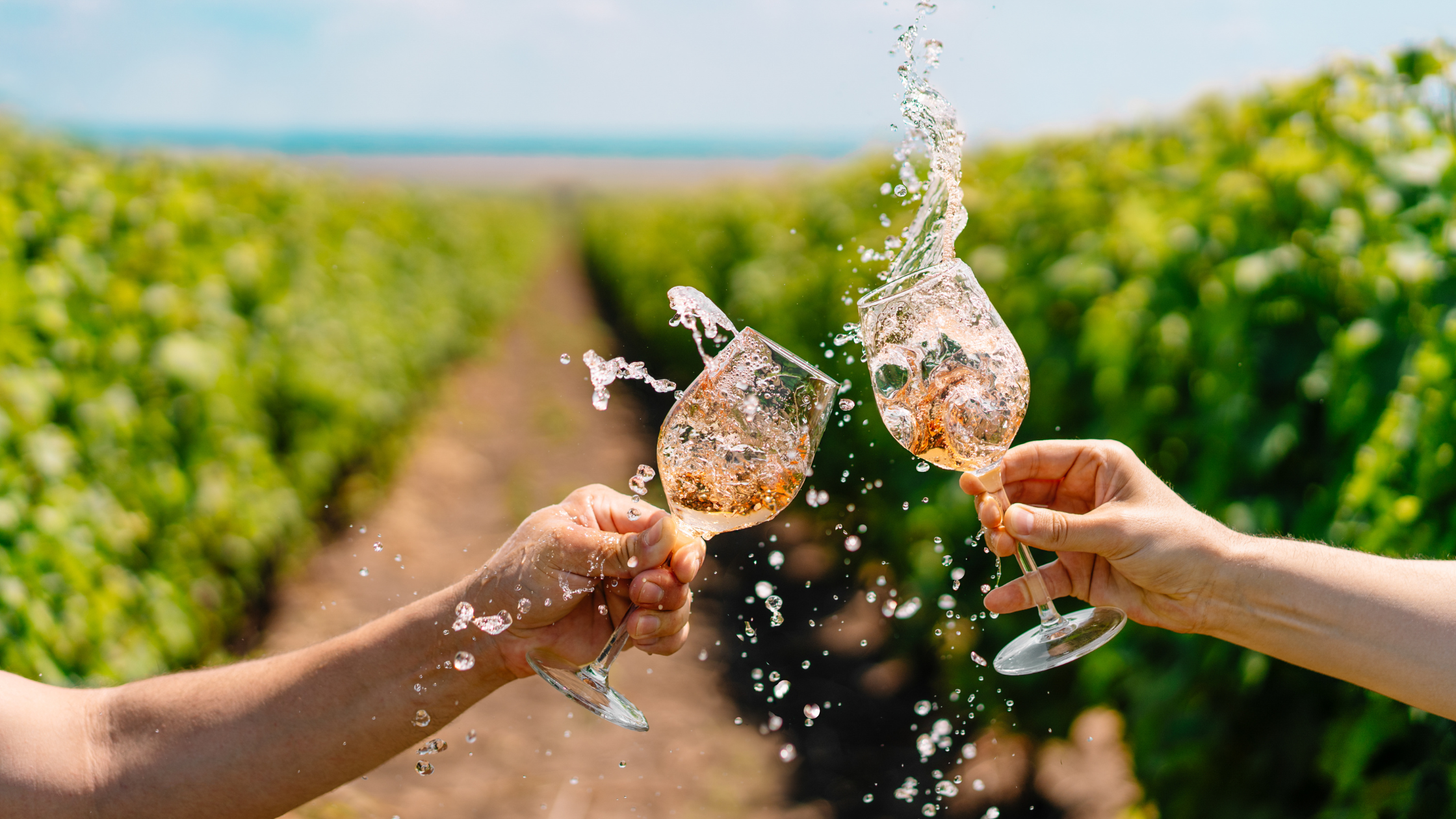

WINE LINGO – BUT MAKE IT 2024.
When I first started this wine blog, one of the things I was nervous about was whether I am familiar enough with wine terminology. But, then I remembered that one of the reasons I wanted to create the English Wine Blog, was to make English wine less intimidating for beginners. So, as I learn more about wine lingo, I can share it with you.
Understanding a bit about wine lingo can help to improve your wine tasting experience. But, in my view it doesn’t have to all be as complicated as it’s made out to be.
Stay with me as a I guide you through some wine lingo, but brought up to date for 2024!
Wine Tasting: Step One – Sight

When you start a wine tasting, the first step will be to look at the wine. I know, I know, wine is for the drinking, not to gaze it. But having a quick glance to study it, before you drink it, can enhance your overall experience. So, what should you look for? Here’s some wine lingo that might help.
1. Legs Eleven
Traditional Description: Sometimes called “tears,” legs are the droplets that form on the inside of a wineglass after swirling.
Modern Interpretation: While often thought to indicate quality or alcohol content, legs really tell you more about the wine’s surface tension and alcohol level. Thicker legs can mean higher alcohol content or a more full-bodied wine.
2. Colour & Clarity
Traditional Definition: Colour and clarity are traditionally used to assess a wine’s age and health, where a brighter color in whites and more garnet hues in reds suggest age.
Modern Interpretation: Clarity is still important – although there is now a trend for more natural wines, which are deliberately unfiltered. However, colour is now seen as more of an indicator of beauty or aesthetic than necessarily indicating the age of the wine. The colour is also a good indicator of how the wine might taste – for example, a paler white or rose may be more crisp than a darker, which might be more fruit forward.
Wine Tasting: Step Two – Smell

Step two, during a wine tasting, is to get your nose in the glass and give the wine a good old sniff. Here’s some wine lingo that might help you to do that.
1. Aroma & Bouquet
Traditional Definition: Aroma refers to the primary smells derived from the grapes themselves, while bouquet refers to the secondary smells developed through fermentation and aging.
Modern Interpretation: Modern enthusiasts often use these terms interchangeably, though purists will still distinguish between young, fruit-driven “aromas” and more complex, developed “bouquets”, seen as a collection of aromas.
2. ‘Who Nose’
Traditional Definition: The overall scent profile of a wine, combining both aroma and bouquet.
Modern Interpretation: Increasingly, “nose” is also used to describe how engaging or pronounced the smells are, with a great “nose” being both complex and alluring.
Wine Tasting: Step Three -Taste

The moment we’ve all been waiting for – the point when you get to actually drink the wine. Here’s some wine lingo that might help you to explain what you can taste.
1. Body: Light, medium or full
Traditional Description: Refers to the weight and feel of the wine in your mouth, often compared to the feeling of skimmed milk (light), whole milk (medium), or cream (full).
Modern Interpretation: Think of it as the wine’s “thickness.” Is it more like water, syrup, or somewhere in between? The reason why people care about the “body” of wine, is that it can help you predict how hearty or light a wine might taste.
The body of wine also impacts how it feels in your mouth – some people don’t like full bodied wine, describing it as too “chewy”. It really depends on your palate.
2. Tannins
Traditional Description: Tannins relate to the dry, puckering sensation in the mouth, coming from the skins, seeds, and stems of grapes.
Modern Interpretation: Think of tannins like the texture of black tea that’s steeped too long. They can make your mouth feel dry, but they’re also what helps give red wines their structure and longevity.
3. Finish
Traditional Description: The finish is the impression and flavors left in your mouth after swallowing.
Modern Interpretation: It’s the aftertaste. Does the flavour vanish quickly or does it linger with you? Long finishes are typically a sign of a quality wine.
4. Crisp
Traditional Description: A wine described as crisp usually refers to white wines with a fresh, bright acidity.
Modern Interpretation: Crisp is to wine what refreshing is to a cold day on a hot day. It’s zesty, maybe a bit tangy, and perfect for cutting through richer foods or sipping on a sunny terrace.
5. Oaky
Traditional Description: Traditionally, “oaky” describes wines with prominent oak-derived flavors like vanilla and toast from aging in oak barrels, often seen as a mark of quality.
Modern Interpretation: Modern interpretations, favour balance and subtlety. Today’s oaky wines are appreciated for how well these oak flavors integrate with the wine’s overall profile.
This shift reflects a preference for wines where oak complements rather than dominates (as was the case with many Chardonnays in the 90s), aligning with contemporary tastes for fruit-forward, less overtly oaked wines. I’m still a fan of a very oaky wine, it’s really a personal choice!
6. Acidity
Traditional Definition: Acidity in wine refers to the fresh, tart, and sometimes sour attributes that give wine its crispness and structure. It is a key factor in the wine’s taste and a primary preservative that influences aging.
Modern Interpretation: Modern discussions of acidity focus on how it balances with other components like sweetness, alcohol, and tannins, contributing to the overall mouthfeel and drinkability of the wine. Acidity is now often discussed in terms of enhancing the wine’s aromatic profile and food pairing versatility.
7. Flavours
When you’re wine tasting, you might also be able to pick up specific flavours. Whether the wine is a total taste sensation, or a more subtle drop, you should be able to pick up something. Here’s some wine lingo to help you.
Fruity Fundamentals
- Apple: This isn’t just any apple; think of it as the difference between biting into a Granny Smith apple in a crisp orchard and a mushy apple that’s been at the bottom of your backpack for too long. White wines like Chardonnay often boast these crisp notes.
- Gooseberry: Not your everyday fruit, and when’s the last time you just happened to snack on a raw gooseberry? This flavor is common in Sauvignon Blanc and brings a tart, almost forbidden fruit-like zing to your palate.
Tropical Escapes
- Pineapple: If your wine could wear a Hawaiian shirt, it would be while flaunting this flavor. Look for it in more adventurous whites like Viognier or some playful Rieslings.
- Mango: The fruit that makes you feel like you should be lying on a beach somewhere. It’s a sweet, lush note that dances in some of the more exotic Gewürztraminers.
Berry Bonanza
- Raspberry: This is the cool cousin in the red fruit family—sweet but with a bit of edge. Red wines, especially lighter ones like Pinot Noir, often have a whisper of raspberry.
- Blackberry: Imagine berry-picking in the deep forest; this taste is often robust and a bit wild, typical of a hearty Shiraz.
Citrus Circle
- Lemon: Zesty and sometimes cheek-puckering, lemon flavors give your wine a refreshing kick, often found in Pinot Grigio or zesty Sauvignon Blanc.
- Grapefruit: It’s like lemon’s sassy sibling, bringing a bittersweet complexity to many dry white wines.
Earth and Spice Rack
- Leather: Yes, leather. No, we’re not suggesting chewing on your belt, but some robust reds, like a mature Cabernet Sauvignon, might just evoke that rich, sumptuous aroma.
- Vanilla: Often a whisper from the oak barrels used during aging, vanilla can make your wine feel like a dessert, minus the calories. You’ll catch this comforting aroma in many Chardonnays.
Floral Whispers
- Rose: If your wine was a perfume, this would be it. Delicate, sometimes romantic, often found in fine rosés or aromatic whites like Gewürztraminer.
- Lavender: Imagine sipping your wine in a French field of lavender; this note can make your Merlot or Syrah feel more like a poetic experience than just a beverage.
A collection of other wine lingo terms
Terroir
Traditional Description: This French term encompasses the natural environment in which the grapes are grown, including factors like soil, climate, and topography
Modern Interpretation: Think of terroir as the wine’s “hometown characteristics” that influence its flavor—like how a tomato might taste different if grown in one region versus another. It’s what makes each wine unique to its origin.
Brut
“Brut” denotes a dry sparkling wine with a low sugar content after fermentation. It is a term commonly used in the context of Champagne and other sparkling wines to indicate a lack of sweetness. In the context of English wine, many English sparkling wine are “brut.”
Cuvée
Traditional Definition: “Cuvée” traditionally refers to a particular batch or blend of wine, especially in the making of Champagne. It denotes a specially selected blend that is considered superior.
Modern Interpretation: In modern viticulture, “cuvée” has expanded to include any wine that involves deliberate blending or selection for special qualities. It’s often used on labels to denote a high-quality wine that showcases the winemaker’s artistry or a vineyard’s specific characteristics.
Blend
Traditional Definition: A blend is a wine made from more than one grape varietal. Traditionally, blending is used to balance flavors, marry complexity, and enhance character.
Modern Interpretation: Today, blending is not just about balance but also about creating a unique narrative and expression of the winemaker’s vision.
Modern blends are often crafted to highlight a region’s diversity or to experiment with unconventional varietal combinations, appealing to a contemporary audience looking for innovation in taste and style. One of the most interesting English wineries making exciting blends, is Renegade Winery in London.
Where to next?


Please note that some links on my website are partnered with affiliates. Using an affiliate link does not make it more expensive for you to purchase. We receive a small commission whenever you buy something which in turn allows me to keep writing independent content. Your support is greatly appreciated.



Leave a Reply